
Was ‘Ronaldinho: The One and Only’?
Mini-series about the Brazilian soccer star is designed to whet our World Cup whistle
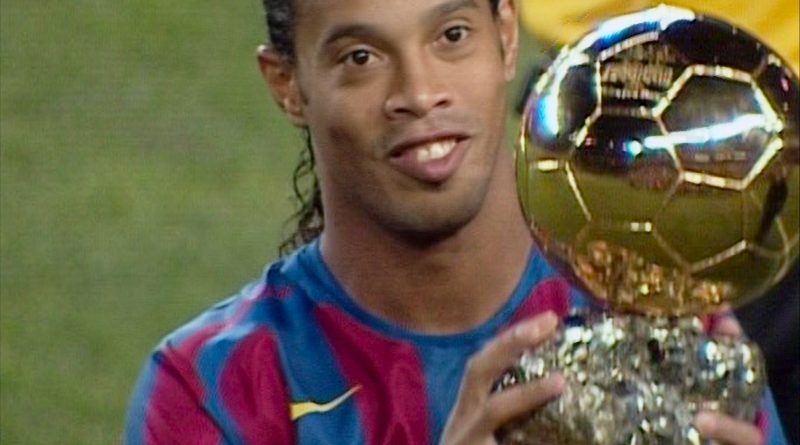
As we exit the Lionel Messi-Cristiano Ronaldo era of global soccer, it’s easy to forget that before their decade and a half rivalry, a clutch of players had a claim to be the world’s greatest footballer. The most thrilling of those was Ronaldhinho Gaúcho (Ronaldo de Assis Moreira) — the bucktoothed boy from Porto Alegre, Brazil.
In his new three part Brazilian mini-series on Netflix, Luis Ara tries to explain how Ronaldinho’s family life and career meshed over the past 40 years: before, during, and after his on-field career. The peak of the mountain is a highly visible slew of trophies, medals, and individual prizes most notably from between 2002 and 2006. The trough of the valley — visited and owned but not really explained — is a bizarre 2020 episode where he and his brother spent a week in a Paraguayan prison for using forged Paraguayan documents.
 As the series shows, Ronaldhinho’s father and brother were also both excellent footballers, but he differs from them and the other pretenders to the crown of soccer’s GOAT by embodying the Brazilian concept of “juga bonito” — the football philosophy of skill and joy on the pitch. Messi is a fading machine of extreme elegance, Ronaldo transformed his skill and pace into two decades of scowlingly brutal effectiveness but neither of them embodied the joy of the “Wizard” who preceded them.
Perhaps if Neymar (Neymar da Silva Santos Júnior) had done more than flicker at his peak, he too would have a claim to that particular apotheosis, but he was not durable enough to last at the elite level for even the few years that Ronaldinho did. Ronaldinho — Ara is at pains to show — was present and maybe even slightly responsible for the emergence of Messi into the Barcelona first team while he was the star there, and Neymar into the limelight of the Brazilian league as they each scored goals in the Flamengo 5 – 4 Santos game in 2011.
It’s easy to overlook Ronaldo de Assis Moreira (Ronaldinho), sandwiched in between the sound-alike icons of the Brazilian Ronaldo (Ronaldo Luís Nazário de Lima) who preceded him and the Portuguese Ronaldo who succeeded him, but for the crowds that loved him, they still have a space in their heart for the player who so clearly loved playing the game and producing its most improbable delights.
Indeed, even to opposition supporters he provided unforgettable moments. For an England fan like myself, there was the audacious free kick that sailed past David Seaman, the England goalkeeper, in the world cup quarter final game of 2002. We bitterly joked that the Brazilian’s virility was not in question if he could lob Seaman over 40 yards. For a Real Madrid fan, there was the 2005 Clasico where Ronaldinho humbled the Galacticos of Madrid for a resurgent Barcelona, prompting the Real Madrid fans — in an unprecedented gesture — to applaud him off the pitch.
He was samba at speed, no-look passes, outrageous free kicks, ball-glued-to-his-foot tricks. He was clutch — hence winning an unmatched series of trophies for his teams on European, South American, and world stages. But he was also — and remains — the little boy of the family, happiest around football and with people he knows. He lives in retirement in a family compound he bought, traveling to do personal appearances around the world, but seemingly happiest back on home turf.

There is some fantastic footage of child-prodigy Ronaldinho playing indoor football and scoring wonderful goals. Even then he played with a beaming grin and an absolute joy which, though it verged on gloating was — at least in the clips in this series — a wonder at the successful achievement of his limbs and movement moving faster than anyone’s thought.
The trouble with this — as with all these hagiographical celebrity biographies — is that they need the buy-in of the families and the clubs to get access to the players and the presidents, the footage, the footballers, and the deal-makers. So who knows how far to trust the stories that we are told of what happened behind the scenes at his clubs: Paris St. Germain, Barcelona, A.C. Milan, and Atletico Mineiro. How far was he a victim of politics? A victim of press stories about his partying when the teams were not winning?
Certainly he and his agent-brother Roberto de Assis Moreira tell a compelling story that he was the fall guy in each case. He certainly seems to have a partying disposition, a disinclination to hide, and, despite his ultra-competitive edge, a complete aversion to personal confrontation. The fact remains somewhat unexplained that he didn’t play more than four seasons at any one club at a time when he was one of the most potent attackers of his generation.
Because he was, incontrovertibly, so good. And because, equally clearly, he evinced a love of playing, this is a satisfying three hours of biography. But it does have a couple of clear holes in it. As well as Neymar, Messi, Ronaldo and a host of famous players and luminaries, Ara interviews Joao Mendes, Ronaldinho’s son who is also a professional footballer. Ronaldinho avers several times that he regrets missing Mendes’ birth — it was game day! That regret is in keeping with the family-first persona that he projects, though it does suggest that his focus was not always quite as family-centric and we don’t really see the focus in those periods when he wasn’t being his momma’s boy.
It’s totally understandable that Mendes’ mother, who is not part of the Ronaldinho entourage, does not want to be part of the series, but Mendes was born in February 2005 right at the peak of Ronldinho’s career and seems like a pretty concrete proof of at least some of what was happening in his personal life at the time. So, if Ara and the Assis clan want to tell a story of a happy-go-lucky footballer with Brazil in his boots who loves his family and was unjustly accused of partying, they should have addressed rather than skirted whole issue of whether his performances, fitness, or mental state were affected by his personal life when he seemed to have the world at his feet.
You May Also Like
-
 August 22, 2023
 -
 November 25, 2019
 -
 August 15, 2023
